By: Sergii Khlivnenko / Process / iGaming / Operations / Posted on: April 12, 2025
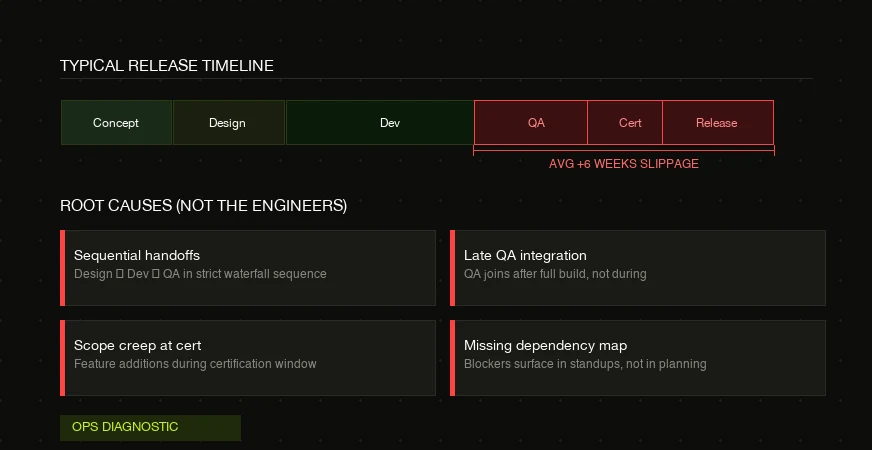
/ Comments: 0 Late game releases are almost never caused by slow developers. In every diagnostic engagement Sergii has run, the root cause of missed deadlines traces back to the same structural problems: sequential handoffs between teams, late QA entry, and sprint planning that doesn't account for complexity. By the time a delay becomes visible, it has been building for weeks.
The most damaging pattern is what Sergii calls "zombie sprints" — sprints that close on paper but carry unfinished work invisibly into the next cycle. The velocity metrics look fine. The backlog looks fine. But the actual time-to-market is silently expanding. This is exactly the kind of bottleneck that Jira data analysis reveals clearly, once you know what to look for.

Velocity metrics can look healthy while time-to-market quietly expands. The gap lives in the handoffs — not the sprints.
Sergii Khlivnenko The fix is rarely a process overhaul. It's usually three or four targeted changes: moving QA involvement earlier, capping work-in-progress at the team level, and creating a complexity-adjusted TTM metric that management can actually trust. Studios that implement these levers typically see 15–35% cycle time reduction within two quarters.
Most delivery problems are structural. Most solutions are surgical.
- Sequential handoffs add invisible wait time to every release cycle
- QA bottlenecks at late stages compound the cost of every earlier mistake
- Zombie sprints make portfolio health invisible to leadership
The most damaging pattern is what Sergii calls "zombie sprints" — sprints that close on paper but carry unfinished work invisibly into the next cycle. The velocity metrics look fine. The backlog looks fine. But the actual time-to-market is silently expanding. This is exactly the kind of bottleneck that Jira data analysis reveals clearly, once you know what to look for.
Posted in : Operations iGaming