By: Sergii Khlivnenko / Game Strategy / Slotifai / iGaming / Posted on: February 18, 2025
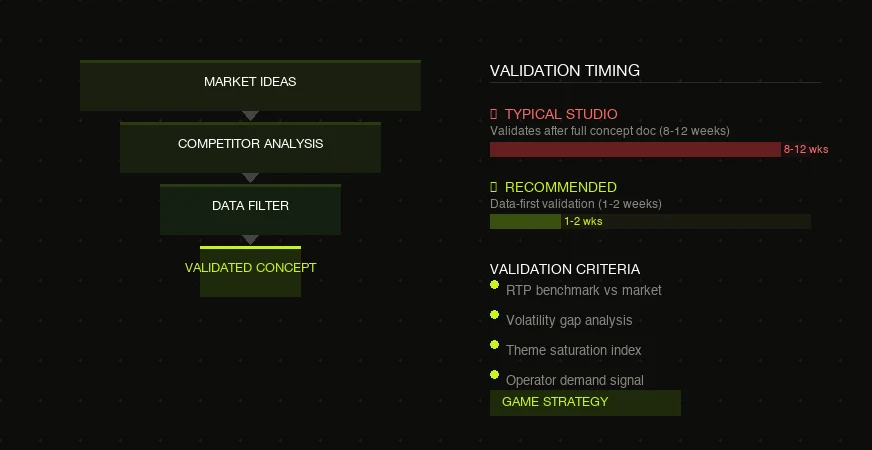
/ Comments: 0 Most iGaming studios validate a game concept the wrong way: by playing competitor games, looking at provider catalogues, and relying on the producer's instincts. This process takes weeks and produces opinions — not evidence. By the time a concept enters development, the studio has already committed to a direction based on incomplete market intelligence.
The shift Sergii advocates — and that Slotifai is built to enable — is moving concept validation upstream. Before a sprint is planned, a studio should know: how saturated is this mechanic in the current market? What providers are winning in this theme? What feature combinations correlate with high player retention historically? These are data questions, and they have data answers.

Studios don't fail because they build bad games. They fail because they build the wrong games — games the market didn't need at that moment.
Sergii Khlivnenko At ICE Barcelona 2026, Sergii presented Slotifai's approach to dozens of Product Owners. The feedback was consistent: the problem is real, the existing tools are insufficient, and the appetite for data-backed concept validation is high. Studios that adopt this approach before their competitors will have a measurable advantage in R&D efficiency.
Validate before you build. The market data already knows what will work.
- Concept validation based on instinct alone leads to expensive flops
- Market saturation analysis can be done in hours, not weeks
- Slotifai ingests thousands of game profiles to surface high-demand niches
The shift Sergii advocates — and that Slotifai is built to enable — is moving concept validation upstream. Before a sprint is planned, a studio should know: how saturated is this mechanic in the current market? What providers are winning in this theme? What feature combinations correlate with high player retention historically? These are data questions, and they have data answers.
Posted in : Strategy iGaming